Mateo Qares Biography: Early Life, Career, Personal Life, Cause of Death and Nationality

Mateo Qares Biography
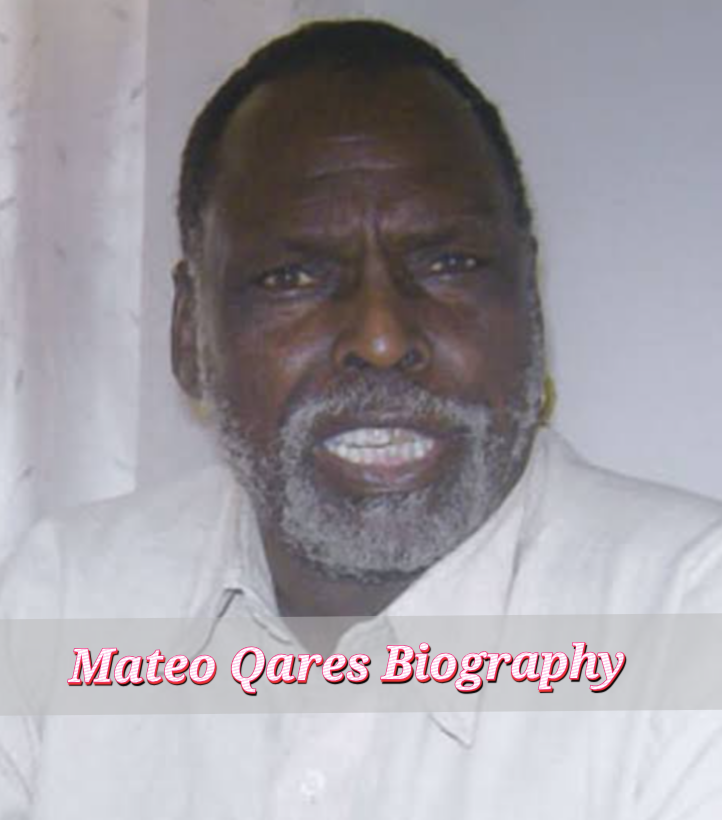
Mateo Qares was a key figure in Tanzanian politics. He served his country in many roles over decades. Born in Tanzania, he became known for his work in government and his fight against corruption. Qares started as a member of parliament and rose to hold cabinet positions. He was part of the Chama Cha Mapinduzi party, often called CCM. This party has led Tanzania since independence.
Qares lived during important times in Tanzania’s history. The country gained freedom from British rule in 1961. It then united with Zanzibar in 1964 to form the United Republic of Tanzania. Qares entered politics in the 1980s, a period of economic changes under President Ali Hassan Mwinyi. Mwinyi served from 1985 to 1995. Later, Qares worked under President Benjamin Mkapa from 1995 to 2005. These leaders focused on reforms to improve the economy and governance.
People remember Qares for his strong stand on ethics. As a minister, he pushed for better public service. He also served as a regional leader in Mbeya. His career showed dedication to public duty. Qares passed away in 2025, leaving a legacy of integrity. Many in Tanzania see him as a model for honest leadership.
This article explores who Mateo Qares was. It covers his early years, his work in politics, any issues he faced, his family life, how he died, and more. The goal is to help readers understand his role in Tanzania’s story. Tanzania is in East Africa, with a population of over 60 million people. Politics there often involves one main party, CCM, but with growing calls for change. Qares’ life reflects the ups and downs of serving in such a system.
His story matters today. Corruption remains a big problem in many African countries. The African Union reports that Africa loses billions each year to corrupt acts. Leaders like Qares who fought it inspire new generations. In Tanzania, the government under President Samia Suluhu Hassan continues anti-corruption efforts started by past leaders. Qares’ work fits into this bigger picture.
Readers will learn facts about Qares. For example, he represented Babati, a rural area in northern Tanzania. Babati is known for its lakes and wildlife. It was part of Arusha region before becoming Manyara region in 2002. Qares’ connection to this place shaped his views on local needs. He focused on issues like water supply and electricity, as noted by those who knew him.
In short, Mateo Qares was more than a politician. He was a patriot who aimed to make Tanzania better. His journey from parliament to ministry shows how one person can impact a nation. Now, let’s look at his beginnings.
Mateo Qares Early Life and Background
Details about Mateo Qares’ early life are limited. Public records do not give his exact birth date or place. However, his ties to Babati suggest he grew up in northern Tanzania. Babati is in what is now Manyara region. This area has diverse ethnic groups, including the Iraqw and Barabaig peoples. Farming and herding are common ways of life there.
Tanzania in the mid-20th century was changing fast. After World War II, calls for independence grew. Julius Nyerere, Tanzania’s first president, led the push for freedom. Nyerere founded the Tanganyika African National Union in 1954. This party later became CCM. Young people like Qares would have seen these events. They shaped many into future leaders.
Qares likely received basic education in local schools. Tanzania emphasized education after independence. Nyerere’s ujamaa policy aimed for self-reliance and community work. This may have influenced Qares’ values. He believed in hard work and national pride, as his later actions showed.
Before politics, Qares might have worked in community roles. Some sources link him to cooperative movements. Cooperatives help farmers sell goods together. In the 1970s, Tanzania pushed these groups under socialism. Qares’ later role as minister of cooperatives hints at early involvement.
His family background is not well-documented. He had relatives in Babati. The area faces challenges like poverty and limited access to services. Growing up there, Qares understood rural struggles. This knowledge helped him connect with voters later.
By the late 1970s, Qares entered public life. Tanzania held its first multi-party elections in 1995, but CCM dominated before that. Qares joined CCM, the ruling party. His early political steps focused on local issues in Babati.
In summary, Qares’ early years built his foundation. From a rural start, he learned about Tanzania’s needs. This prepared him for a long career in service. Though details are few, his roots in Babati and CCM set the stage.
Mateo Qares Career
Mateo Qares had a long career in Tanzanian politics. He started as a member of parliament. From 1980 to 1995, he represented Babati constituency. At that time, Babati was part of Arusha region. In 2002, it became part of Manyara region. As MP, Qares worked on local development. He pushed for better roads, schools, and health care.
In the 1980s, Tanzania faced economic hardship. The country shifted from socialism to more open markets under President Mwinyi. Qares supported these changes. He held his first cabinet role from 1989 to 1990 as Minister of Cooperatives and Marketing. This job involved helping farmers and businesses. Cooperatives were key to Tanzania’s economy then.
Qares served during two presidents. Under Mwinyi from 1985 to 1995, he handled various tasks. Then, under Mkapa from 1995 to 2005, he continued. Mkapa focused on fighting corruption and improving governance. Qares fit well in this era.
From 1996 to 2000, Qares was Minister of Public Service. This role is also known as Minister of Public Service and Good Governance. He worked to make government more efficient. Qares pushed for ethics in public offices. People remember him for standing against bribes.
In 2000, Qares became Regional Commissioner of Mbeya. He held this post until 2006. Mbeya is in southern Tanzania, known for agriculture and mining. As commissioner, he oversaw local administration. He focused on development projects like water and power.
Qares was part of CCM’s inner circle. In the 1990s, he joined the Group of 55, or G55. This was a group of MPs pushing for party reforms. They wanted more democracy within CCM. Qares worked with figures like Njelu Kasaka and Philip Marmo.
His career highlights include:
- Representing Babati in parliament for 15 years.
- Serving as minister in key sectors.
- Leading Mbeya region for six years.
- Fighting corruption through policies.
Qares retired from active roles after 2006. But his influence lasted. In tributes after his death, people noted his firm leadership. A resident said Babati had no better leader. Former Prime Minister Frederick Sumaye praised him.
Qares’ work helped Tanzania’s progress. Under Mkapa, the economy grew. Poverty dropped. Qares contributed to these gains. His focus on good governance aligned with global goals like the UN’s Sustainable Development Goals.
In East Africa, leaders like Qares are rare. Kenya and Uganda have similar anti-corruption fights. Qares’ example shows how one leader can push change. His career teaches the value of integrity in politics.
Mateo Qares Controversies
Mateo Qares faced some issues in his career. Not all were major, but they show politics’ challenges.
One issue came in 2005. Qares was Regional Commissioner in Mbeya. During elections, he did not fully support CCM candidate Jakaya Kikwete. Kikwete became president. Some say Kikwete then took action against Qares, including seizing rice farms. This suggests internal party rivalries.
As part of G55 in the 1990s, Qares opposed some CCM policies. G55 wanted faster reforms. This group challenged leaders like Mwinyi. Some saw it as disloyalty. But it led to positive changes in the party.
Qares had a strong style. People said he stuck to his beliefs without fear. This firmness sometimes caused clashes. In Mbeya, he enforced rules strictly. Some locals might have disagreed with his methods.
No major scandals linked to Qares. He was known for anti-corruption, not involvement in it. Tanzania’s Prevention and Combating of Corruption Bureau handles such cases. Qares never faced charges.
In politics, appointments can spark debate. Qares moved from MP to commissioner. Some say this shows favoritism in CCM. But he earned roles through service.
Overall, controversies were minor. They highlight Tanzania’s political dynamics. CCM has ruled since 1977. Internal groups like G55 push for balance.
Qares’ story shows leaders can face pushback while doing good. His firmness helped in anti-corruption but created foes.
Mateo Qares Personal Life
Mateo Qares kept his personal life private. He had a family in Babati and Dar es Salaam.
His son, Anthony Mateo, spoke after his death. Anthony said Qares taught good values like integrity. The family stressed Tanzanian ethics.
Qares had siblings and relatives in Nakwa, Babati. Mourning happened at his home there. He owned property, including farms.
Outside politics, Qares enjoyed community work. Residents recall his help with water and electricity projects. He was seen as hardworking.
No details on hobbies or education beyond basics. His life focused on service.
Qares’ personal values matched his public role. He was a patriot, as tributes say.
Mateo Qares Cause of Death
Mateo Qares died on July 9, 2025. He passed at Muhimbili National Hospital in Dar es Salaam. No official cause was stated in reports.
He was likely in his 70s or 80s, based on career start in 1980. Age-related issues may have played a role, but this is not confirmed.
A farewell mass occurred on July 10, 2025. His body went to Babati for burial on July 12, 2025.
Tributes came quickly. Many mourned his loss.
Conclusion
Mateo Qares left a mark on Tanzania. From MP to minister, he served with dedication. His fight against corruption inspires many.
Tanzania needs more leaders like him. His legacy lives in better governance.
FAQs
What was Mateo Qares known for?
He was known as a CCM politician and anti-corruption fighter.
When did Mateo Qares die?
He died on July 9, 2025.
What positions did Mateo Qares hold?
He was MP for Babati (1980-1995), Minister of Cooperatives (1989-1990), Minister of Public Service (1996-2000), and Mbeya Commissioner (2000-2006).
What was his impact on Tanzanian politics?
He pushed for ethics and reforms in CCM.
Why is Mateo Qares remembered?
For his firm stand against corruption and service to people.