Kalpana Chawla Biography
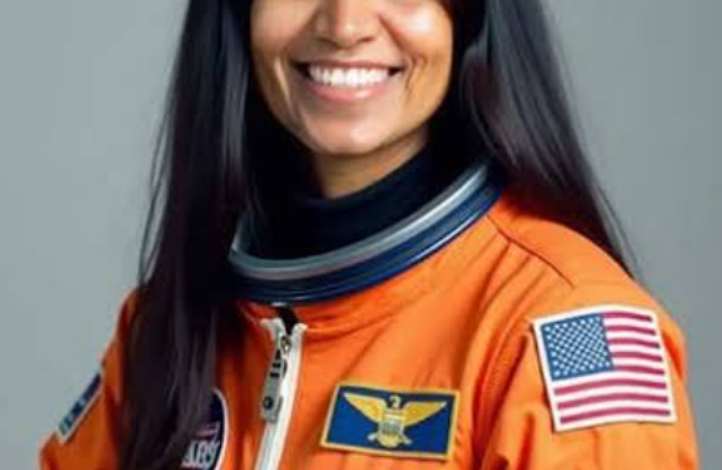
Kalpana Chawla was a remarkable person who broke barriers in space exploration. She was born on March 17, 1962, in Karnal, India. She became the first woman of Indian origin to travel to space. Her life story inspires many people around the world, especially women and girls interested in science and engineering. Chawla worked as an astronaut and aerospace engineer for NASA. She flew on two space shuttle missions. Her first mission was in 1997, and her second was in 2003. Sadly, she died during the second mission when the space shuttle broke apart. Despite this tragedy, her achievements continue to motivate others to pursue dreams in STEM fields. This biography covers her early years, education, career, personal life, and lasting impact. It aims to educate readers about her contributions to space science.
Kalpana Chawla grew up in a time when few women from India entered fields like engineering. Yet, she followed her interest in flying and space. She moved to the United States to study further and became a naturalized citizen. At NASA, she proved her skills in research and spaceflight. Her story is not just about space travel. It is also about overcoming challenges and inspiring future generations. Readers can learn from her dedication and courage. This article uses simple words to make her life easy to understand. It focuses on facts from reliable sources to provide accurate information.
Chawla’s role in space missions helped advance scientific knowledge. She conducted experiments that studied how things behave in zero gravity. These studies have applications in medicine, materials, and more. Her legacy includes awards and memorials that honor her memory. By reading this, you will see how one person’s determination can change the world. Let us explore her life step by step.
Kalpana Chawla Early Life and Background
Kalpana Chawla came from a modest family in India. She was the youngest of four children. Her parents were Banarsi Lal Chawla and Sanjyothi Chawla. Her father owned a tire manufacturing business. The family had roots in Punjab, but they moved during the 1947 partition of India. They settled in Karnal, which is now in Haryana state. Chawla’s family faced hardships as refugees, but they built a new life.
As a child, Chawla showed curiosity about the world. She loved watching airplanes at a local flying club. This sparked her interest in aviation. She often drew pictures of planes and dreamed of flying. Her family called her Montu, a nickname. But she chose the name Kalpana, which means imagination, for her school records. This name fit her creative spirit.
Chawla grew up in the 1960s and 1970s. India was developing after independence. Education was important in her home. Her parents encouraged learning, though they wanted her to choose safe careers like teaching or medicine. Chawla had different ideas. She wanted to study engineering. In her school years, she did well in studies. She attended Tagore Baal Niketan Senior Secondary School in Karnal. She graduated in 1976 with high marks.
Life in Karnal shaped her. The town was small, but it had influences from nearby cities. Chawla learned to be independent. She rode a bicycle to school and explored her surroundings. Her siblings included two sisters, Sunita and Dipa, and a brother, Sanjay. They supported each other. Chawla’s early experiences taught her resilience. These qualities helped her later in life when she faced obstacles in a male dominated field.
Her background as an Indian girl in a conservative society made her achievements even more notable. She broke stereotypes by pursuing science. Her story reminds us that where you start does not limit where you can go.
Kalpana Chawla Education
Kalpana Chawla’s education laid the foundation for her career in space. After high school, she joined DAV College for Women in Karnal for pre university studies. Then, she moved to Dyal Singh College for more courses. She wanted to study aeronautical engineering. Her father opposed this at first, but she convinced him.
In 1978, Chawla enrolled at Punjab Engineering College in Chandigarh. She was one of the first women in the aerospace program there. The college had few female students. Professors sometimes discouraged her, saying job options were limited for women in India. But Chawla stayed focused. She graduated in 1982 with a Bachelor of Science degree in aeronautical engineering. She was the first woman to do so from that college.
Chawla then decided to study abroad. She moved to the United States in 1982. She joined the University of Texas at Arlington. There, she earned a Master of Science in aerospace engineering in 1984. Her thesis focused on optimizing fan housings for airplane wings. This work showed her skill in technical problem solving.
Next, she went to the University of Colorado Boulder. She completed another Master of Science in 1986 and a PhD in aerospace engineering in 1988. Her doctoral thesis was on computing dynamics and control of unsteady flows. This research involved complex math and simulations. It prepared her for work in fluid dynamics.
While studying, Chawla also learned to fly. She got pilot licenses for airplanes, gliders, and seaplanes. She even became a certified flight instructor. These skills added to her engineering knowledge. Her education journey took her from India to top US universities. It equipped her with the tools to succeed at NASA.
Chawla’s academic path highlights the importance of perseverance. She faced cultural and gender barriers but kept learning. Her degrees opened doors to advanced research and space exploration.
Kalpana Chawla Career
Kalpana Chawla’s career began after her PhD. In 1988, she joined NASA Ames Research Center in California. She worked as a researcher in computational fluid dynamics. Her job involved studying vertical and short takeoff and landing aircraft. She used computers to simulate air flows around planes. This work helped improve aircraft designs.
In 1993, Chawla moved to a private company called Overset Methods Inc in Los Altos, California. She served as vice president and research scientist. There, she focused on simulations of moving bodies. Her team developed methods to model how objects interact in air or space. This experience built her expertise in aerospace simulations.
Chawla became a US citizen around 1991. This allowed her to apply for NASA’s astronaut program. In December 1994, NASA selected her for Astronaut Group 15. She started training at Johnson Space Center in March 1995. Training included learning about space systems, survival skills, and robotics.
After training, Chawla worked in the astronaut office. She supported extravehicular activities and robotics. In 1996, NASA assigned her to her first mission.
The mission used the space shuttle Columbia. Chawla was a mission specialist. She operated the robotic arm to deploy a satellite called Spartan. The satellite had a problem, but an investigation cleared her of blame. It was due to software issues. During the flight, the crew conducted experiments in microgravity. These included studies on how liquids mix in space for better materials on Earth. The mission lasted 15 days and 16 hours. The shuttle orbited Earth 252 times and traveled over 10 million miles.
After STS 87, Chawla continued ground work at NASA. She helped with space station development and spoke to students about space. In 2000, NASA picked her for STS 107. This was another Columbia mission, starting on January 16, 2003. It focused on science experiments. Chawla was a mission specialist again. She worked on studies about combustion, Earth observation, and biology. The crew completed about 80 experiments. These advanced knowledge in fields like cancer research and fire safety.
Chawla’s career showed her as a skilled engineer and astronaut. She logged over 30 days in space. Her work contributed to NASA’s goals in research and exploration.
Kalpana Chawla :The Columbia Disaster and Tragic End
Kalpana Chawla’s second mission ended in tragedy. STS 107 launched on January 16, 2003, from Kennedy Space Center. The crew included seven astronauts: Rick Husband, William McCool, Michael Anderson, David Brown, Laurel Clark, Ilan Ramon, and Chawla. The flight was dedicated to research. They worked in shifts to run experiments around the clock.
During launch, a piece of foam insulation broke off from the shuttle’s external tank. It hit the left wing. This damage was not noticed at first. The mission proceeded normally for 16 days. On February 1, 2003, Columbia began reentry into Earth’s atmosphere. Heat from reentry caused the damaged wing to fail. The shuttle broke apart over Texas and Louisiana.
All seven crew members died. Chawla was 40 years old. The accident happened 16 minutes before planned landing. Debris scattered across several states. Investigators found the foam strike was the main cause. The Columbia Accident Investigation Board released a report in August 2003. It recommended changes to shuttle safety.
Chawla’s remains were found near Hemphill, Texas, by February 11, 2003. They were cremated and scattered at Zion National Park in Utah, as per her wishes. The disaster led NASA to ground the shuttle fleet for over two years. It improved inspections and repairs.
Kalpana Chawla Personal Life
Kalpana Chawla had a supportive personal life. She met Jean Pierre Harrison while studying at the University of Texas at Arlington. He was a flight instructor. They shared a love for flying. They married on December 2, 1983. Harrison encouraged her career. He was also a pilot and author.
Chawla enjoyed many hobbies. She liked hiking, backpacking, and reading. She practiced aerobatics in small planes. She held licenses for various aircraft. In her free time, she learned Bharatanatyam, an Indian classical dance. This connected her to her cultural roots.
Chawla lived in Texas. She became a US citizen in the early 1990s. She kept ties to India, visiting family. She spoke about her experiences to inspire others. Her marriage was strong, with no children mentioned. Harrison later wrote a book about her life.
Chawla was known for her calm nature and hard work. Friends called her KC. She valued simplicity and focus. Her personal life balanced her demanding career.
Kalpana Chawla Legacy
Kalpana Chawla’s legacy lives on through honors and inspirations. On February 4, 2003, President George W Bush awarded her the Congressional Space Medal of Honor posthumously. She also received the NASA Space Flight Medal and NASA Distinguished Service Medal.
Many places bear her name. In February 2003, India renamed a satellite Kalpana 1. Punjab Engineering College named a girls’ hostel after her and started a prize for top students. In August 2003, an asteroid was named 51826 Kalpanachawla. NASA named a hill on Mars after her in 2004.
Other memorials include a lunar crater named Chawla in 2006. Haryana built the Kalpana Chawla Planetarium in 2007. The University of Texas at Arlington dedicated Kalpana Chawla Hall in 2004 and a memorial in 2010. Karnataka started the Kalpana Chawla Award for young scientists in 2004. A medical college in Karnal opened as Kalpana Chawla Government Medical College in 2017.
In 2020, Northrop Grumman named a spacecraft SS Kalpana Chawla. She appeared in a National Geographic series in 2020. A 2023 film featured her story.
Chawla inspires women in STEM. She showed that dreams can come true with effort. Schools and programs use her life to teach perseverance. Her total space time was 31 days, 14 hours, and 54 minutes. Her impact reaches beyond space, encouraging global youth.
Conclusion
Kalpana Chawla’s life was short but full of achievements. From a small town in India to the stars, she showed what is possible. Her education and career broke barriers. Though her end was tragic, her spirit endures. She reminds us to chase dreams boldly. Future astronauts and scientists look to her as a role model. Her story educates and motivates. Let us remember her contributions to space and humanity.
FAQs
What is Kalpana Chawla famous for?
She is famous for being the first Indian origin woman in space. She flew on two NASA missions.
Where was Kalpana Chawla born?
She was born in Karnal, Haryana, India, on March 17, 1962.
How did Kalpana Chawla die?
She died on February 1, 2003, in the Columbia space shuttle disaster during reentry.
What was Kalpana Chawla’s education?
She earned a bachelor’s in aeronautical engineering from Punjab Engineering College in 1982, a master’s from University of Texas at Arlington in 1984, and a PhD from University of Colorado Boulder in 1988.
How old was Kalpana Chawla when she died?
She was 40 years old.
What did Kalpana Chawla achieve?
She conducted space experiments, operated robotic arms, and inspired women in STEM.
Is Kalpana Chawla’s legacy still relevant?
Yes, her honors and memorials continue to motivate people in science and exploration.