Anna Abdallah Biography: Net Worth, Career, Age, Awards, personal Life, Education

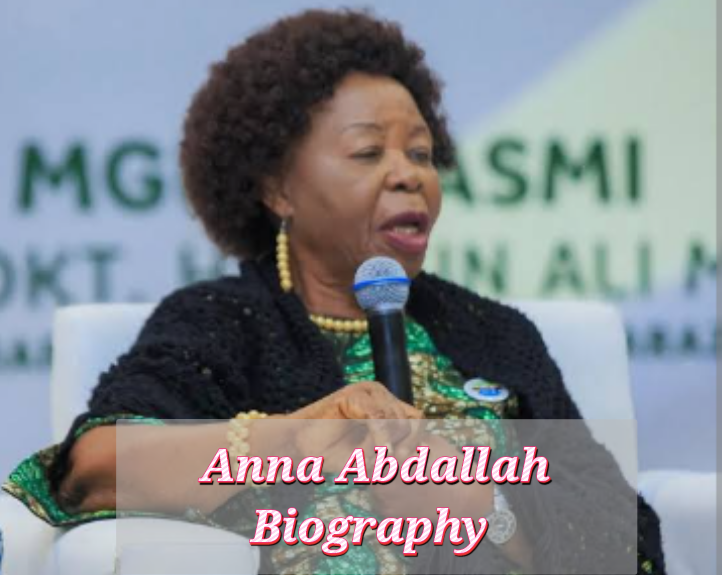
Anna Abdallah Biography
Anna Abdallah stands out as a key figure in Tanzania’s history. She broke barriers for women in government. Born on July 26, 1940, she grew into a leader who fought for equality and progress. Her work spans decades, from local roles to national ministries. As a member of the Chama Cha Mapinduzi party, she held special seats in parliament. She also led efforts for women’s rights and peace. This biography explores her path to inspire readers. It shows how one person can change society through hard work and vision. Anna’s story teaches us about resilience in a male-dominated world. Today, at age 85, she remains an icon for future generations.
Her journey began in a time when Tanzania was still under colonial rule. Independence in 1961 opened doors for leaders like her. She used her skills in nursing and education to serve the public. Over the years, she held posts that shaped health, agriculture, and infrastructure. She founded groups like Creators of Peace in 1991 to promote harmony. Her books, such as “Women’s Empowerment in Tanzania,” share her ideas on growth and joy. Anna’s life proves that women can lead with strength and compassion. This article covers her background, achievements, and impact in simple terms.
Anna Abdallah Early Life
Anna Abdallah entered the world on July 26, 1940, in Tanganyika Territory. This area later became Tanzania after independence. She grew up in the southern part of the country, in Mbeya region. Life was simple in those days, with colonial influences shaping daily routines. Her family followed Roman Catholic beliefs, which guided her values. As a child, she saw the struggles of women in a society that favored men. This sparked her interest in fairness.
In her youth, Anna faced cultural norms that limited girls. Many families kept daughters at home for chores instead of school. But Anna pushed forward. She attended local schools and showed early promise. The era of Julius Nyerere’s leadership after 1961 inspired her. Nyerere promoted unity and education for all. Anna drew from this to build her path. Her early experiences taught her about ethnic diversity in Tanzania. She later used this to advocate for minority rights.
By the 1950s, Tanganyika moved toward freedom. Anna witnessed rallies and talks about self-rule. These events shaped her view on public service. She learned to value community over self. Her humble start fueled her drive to help others. Today, her story reminds us that beginnings do not define ends. Anna’s early life set the stage for a career full of firsts.
Anna Abdallah Education
Anna Abdallah pursued learning with determination. She started at Mtandi Primary School in Mbeya, Tanzania. Then she moved to Loleza Girls Middle School, also in Mbeya. For high school, she went to Tabora Girls Secondary School. This gave her a strong base in basic subjects.
In 1963, she earned a Bachelor of Arts in Sociology and Housing from the University of Missouri in Columbia, United States. This degree helped her understand society and homes. It was rare for Tanzanian women to study abroad then. Scholarships made it possible. Four years later, in 1967, she got a Certificate in Home Economics from Queen Elizabeth College at the University of London, United Kingdom. This focused on family and nutrition skills.
She also trained as a nurse, gaining practical health knowledge. Her studies blended theory and real-world use. This prepared her for roles in government and community work. Education opened doors in a time when few women had such chances. Anna’s path shows the power of learning to change lives.
Anna Abdallah Personal Life
Anna Abdallah keeps her private world close. She married Pius Msekwa, a fellow Tanzanian leader. He served as Speaker of the National Assembly. Their partnership supported her busy career. As a Roman Catholic, faith plays a big role in her life. It guides her choices and advocacy.
She balanced family with public duties. By 2014, she was a great-grandmother. This shows a full home life amid politics. Anna often speaks on the need for supportive husbands for women’s success. She faced challenges like parliament not being child-friendly. Yet, she raised her family while serving the nation.
Her personal values shine in her work. She promotes joy and peace in tough times. Books like “Hauta kwa! – Shetawa and Joy” reflect this. Anna’s life blends duty, faith, and love.
Anna Abdallah Net Worth
Public figures like Anna Abdallah often have private finances. No reliable sources list her exact net worth. As a long-time politician, her income came from government salaries and pensions. Ministers in Tanzania earn modest pay compared to private sectors.
In 1995, she received the Order of the United Republic of Tanzania. This honor does not include money but shows respect. Her books and advocacy work may add some earnings. However, she focused on service, not wealth. Estimates are hard without official data. Her true value lies in her contributions to society.
Anna Abdallah Career
Anna Abdallah’s work life is full of milestones. She started as a nurse after her studies. This gave her hands-on experience in health care. From 1969 to 1973, she served as principal of Buhare College. There, she pushed for education in local languages.
In 1973, she became one of Tanzania’s first female District Commissioners. People sometimes doubted her because she was a woman. But she proved them wrong. She championed women’s cooperatives and land rights. As Regional Commissioner, she acted as a “visual aid” to encourage girls’ schooling.
She entered parliament in 1975, one of only six women. From 1987 to 1996, she was in the National Legislative Assembly. In 1983, she oversaw Dodoma’s capital development. She held cabinet posts like Minister of Local Government, Community Development, Co-operatives, and Marketing.
In 1991, she became Minister of Agriculture and Livestock Development. From 1995 to 2000, she was Minister of Public Works. Then, from 2000 to 2005, Minister of Health. In health, she fought diseases like leprosy and bilharzia.
She chaired the Union of Tanzanian Women from 1994 to 2008. In 1991, she founded Creators of Peace. This group promotes women’s role in harmony. Since 2005, she leads the National Movement People’s Democratic Front Party. She advocates for gender equality and minority rights.
She was the first woman to chair the Defense and Security Committee. She helped build Mazimbu, home to Solomon Mahlangu Freedom College. Her career lists many firsts for women in Tanzania.
To summarize her key roles in a list:
Principal of Buhare College, 1969 to 1973.
District Commissioner, starting 1973.
Member of Parliament, from 1975.
Oversight of Dodoma development, 1983.
Minister of Agriculture and Livestock Development, 1991.
Minister of Public Works, 1995 to 2000.
Minister of Health, 2000 to 2005.
Chairperson of Union of Tanzanian Women, 1994 to 2008.
Founder of Creators of Peace, 1991.
Leader of National Movement People’s Democratic Front Party, since 2005.
Anna’s work improved lives in health, education, and rights. She retired from ministry in 2005 but stayed active. Her efforts helped raise women’s representation in parliament to over a third by 2014.
Anna Abdallah Controversies
Anna Abdallah’s long career had few public disputes. In 2014, she spoke on sexism in politics. Opponents said, “Don’t vote for the woman, she wears lipstick.” This showed bias against female leaders. Anna faced such remarks but overcame them.
In 2007, a news report mentioned her in an AIDS drug issue. As former Health Minister, she stayed silent on the matter. Details were limited, and it did not lead to major fallout.
She noted parliament’s lack of support for mothers. This sparked talks on better policies. Anna’s openness highlighted systemic problems, not personal faults.
Overall, her record focuses on positive change. Controversies were minor compared to achievements.
Anna Abdallah Legacy
Anna Abdallah’s impact lasts in Tanzania and beyond. She paved ways for women in power. As first female Regional Commissioner, she inspired many. Her health work reduced diseases like elephantiasis.
She founded Creators of Peace in 1991. This initiative spreads women’s views on harmony worldwide. Her quote: “We must create the positive element called ‘peace,’ which is not just the absence of weapons… Women are the missing link.”
As party leader since 2005, she pushes for indigenous education and minority rights. Her ten books, like “Shetawa I kwanage ni kwijut,” teach empowerment.
In 1995, she got the Order of the United Republic of Tanzania. This award honors her service. Leaders like Jenister Mhagama credit her as a mentor.
Her legacy includes more women in parliament. From six in 1975 to 126 by 2014. She aligns with UN goals on gender equality. Anna’s life encourages young women to lead.
Conclusion
Anna Abdallah’s story is one of trailblazing. From a girl in colonial Tanganyika to a national leader, she showed grit. Her focus on women, health, and peace changed Tanzania. At 85, her influence continues. Future leaders can learn from her balance of work and values. Anna proves that with education and courage, anyone can make a difference. Her biography educates us on progress and equality.
FAQs
What is Anna Abdallah’s full name?
Anna Margareth Abdallah.
When was Anna Abdallah born?
July 26, 1940.
What is her age in 2026?
85 years old.
What party does she belong to?
Chama Cha Mapinduzi.
What was her first major role?
One of the first female District Commissioners in 1973.
What initiative did she start in 1991?
Creators of Peace.
How many books has she written?
Ten, including “Women’s Empowerment in Tanzania.”
What award did she receive in 1995?
Order of the United Republic of Tanzania.
What is her role since 2005?
Chairman of the National Movement People’s Democratic Front Party.
What did she advocate for?
Women’s rights, ethnic minority rights, and education in indigenous languages.