David Gian Maillu Biography: Early Life, Career, Age and Personal Life

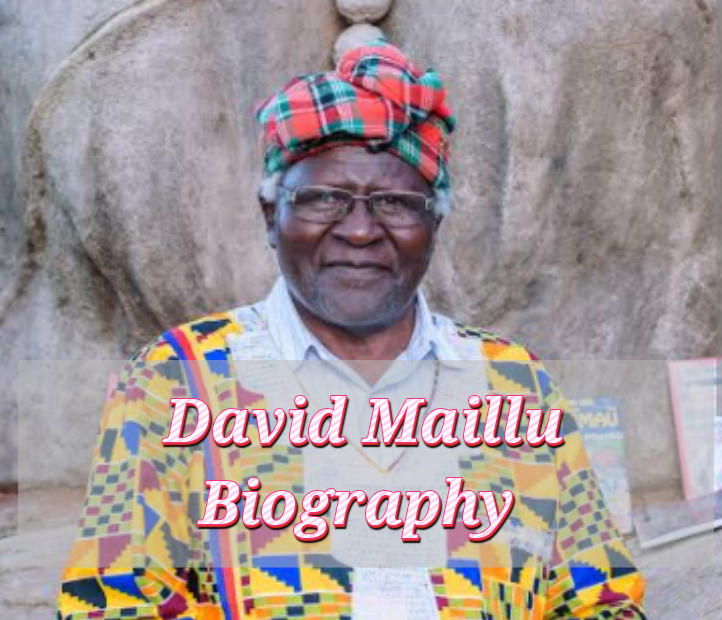
David Gian Maillu Biography
David Gian Maillu is a well-known Kenyan author and publisher. Born on October 19, 1939, he is often called East Africa’s most prolific writer. He has published more than 90 books over many years. Some sources note over 60 books up to recent times, but updates show higher numbers with ongoing work. His stories cover everyday life, social issues, and African culture in simple yet bold ways.
Maillu is not just a writer. He is also a painter, sculptor, musician, and thinker. He started his own publishing company to share his work when others would not. His books, like After 4:30, My Dear Bottle, and Unfit for Human Consumption, became very popular in the 1970s. They talked about topics such as city life, alcohol dangers, and relationships openly. This made him a key figure in Kenyan popular fiction.
People know him for bringing African voices to literature in an easy-to-read style. He challenges old ideas and promotes African values. Even at over 85 years old in 2025 and 2026, he remains active. He gives talks on culture and spirituality. His home in Makueni County holds art and books, like a small museum. Readers value his work because it teaches lessons while telling good stories.
David Gian Maillu Early Life and Background
David Maillu was born in 1939 in Kilungu Location, in what was then colonial Kenya. His parents were Joseph Mulandi and Esther Kavuli. They lived in a poor family in a rural area of the Ukambani region, home to the Kamba people. His family followed traditional ways, and his parents had little formal education. His father went to school for only two years to learn reading and writing.
His exact birth date was not recorded clearly. His mother said it was around the start of World War II and during the cow peas harvest season, which falls in September or October. Maillu later chose October 19 himself. He used knowledge of astrology and numerology to pick this date. He liked how the numbers added up to ten, which fit his view of life.
Life was hard in those days under British rule. The colonial government did not push early education for African children. Maillu did not start school until he was 12 years old. He went to a Salvation Army school and joined Standard One with adults, including some mothers and their children. The first lessons focused on Bible stories.
He showed interest in learning early. He taught himself to read and write before school. After four years of primary school, he took the Common Entrance Examination. Later, he joined intermediate school and passed the Kenya African Preliminary Education exam in 1958. He then went to Machakos Technical School to study painting and decoration for three years.
Maillu continued learning on his own through correspondence courses from a British tutorial college. This self-education helped him a lot. He supported his brothers and sisters while working. His early life in the village shaped his love for African art, stories, and social questions. He drew from Kamba culture and the challenges of colonial times.
David Gian Maillu Career
Maillu began his working life after school. In the 1960s, he worked as a graphic artist at the Voice of Kenya, now known as Kenya Broadcasting Corporation. He started there around 1964 and stayed for about ten years. This job gave him skills in design and art.
He started writing in the late 1960s and early 1970s. Mainstream publishers turned down his early manuscripts. They called his work unsuitable. So, in 1972, he started his own company called Comb Books. With help from his wife and some aid, he bought equipment and published his books himself.
His first big successes came in 1973 with Unfit for Human Consumption and My Dear Bottle. In 1974, After 4:30 followed. These books sold very well, with thousands of copies printed. They told stories about real problems in Kenyan cities, like alcohol use, early marriage, and life struggles. People bought them quickly, and they became popular across East Africa.
Maillu wrote in a direct style that many readers enjoyed. He covered topics others avoided. Over time, he published dozens of books through Comb Books. The company grew but later faced money problems and closed after some years.
He kept writing. Some books came out through other publishers, like Macmillan in the Pacesetters series. Examples include For Mbatha and Rabeka, Thorns of Life, and The Equatorial Assignment. His long novel, The Broken Drum, won the Jomo Kenyatta Prize for Literature in 1992.
Later, he worked with Mvua Press. They reissued books like After 4:30 in 2025. Maillu has more than 90 published titles. He also has over 130 unpublished manuscripts ready. Besides writing, he paints, sculpts, plays guitar, and composes music. His career shows hard work and independence in African literature.
David Gian Maillu Personal Life and Beliefs
Maillu married Hannelore Nuthmann in January 1971. She is from Germany and came to Kenya in 1967 to work for the National Council of Churches of Kenya. They met through a friend in Nairobi. Maillu says he knew she would be his wife from the first meeting. Hannelore has supported him fully, even in tough times. They have a daughter together.
The couple has lived in different places, including a flat in Limuru where he wrote early books. They built a home in Otiende, Langata, Nairobi, and later in Mathemboni, Makueni County. This rural home is full of his art, sculptures, and books. It serves as a place for culture and learning.
Maillu earned a doctorate in African Literature and Political Philosophy from St Clements University through an unorthodox path. He is proud of being mostly self-taught from Standard Eight level onward.
He holds strong beliefs in African spirituality. He calls himself the president of African Spirituality. In 2023, he gave a public lecture on witchcraft at his home in Mathemboni on August 5. Many people attended. He spoke about witchcraft having both harmful and useful parts. He said science should study it and that it holds wisdom like other sciences. He wants more research to understand African traditions better.
Maillu promotes African values and identity through his work. He believes Africans should write and publish to keep their culture alive. His views come from his life in traditional and colonial Kenya.
Conclusion
David Maillu has made a big mark on Kenyan and African literature. From a poor village boy in colonial times to a leading author, his path shows determination. He started school late, taught himself much, and built a career despite challenges.
His books bring real stories to readers in simple language. They teach about life, warn about dangers, and celebrate African ways. By starting Comb Books, he opened doors for self-publishing in Africa.
Today, in his late 80s, Maillu still writes and shares ideas on culture and spirituality. His home stands as a center for art and thought. He inspires new writers to tell their own stories.
FAQs
Who is David Maillu known for?
He is known as East Africa’s most prolific writer. He has published many books on social issues and African culture. He is also a publisher, artist, and thinker on spirituality.
How many books has David Maillu written?
He has published more than 90 books. Some sources say over 60 up to certain years, but recent information shows higher numbers. He has over 130 unpublished works too.
What are some of David Maillu’s most famous books?
Popular ones include After 4:30 (1974), My Dear Bottle (1973), Unfit for Human Consumption (1973), For Mbatha and Rabeka, and The Broken Drum, which won an award.
Is David Maillu married?
Yes, he married Hannelore in 1971. She is German and has supported his work for many years.
What are David Maillu’s views on African spirituality?
He sees himself as president of African Spirituality. In 2023, he lectured on witchcraft, saying it has scientific elements and useful knowledge. He calls for study to value African traditions.
Is David Maillu still active in writing?
Yes, as of 2025 and 2026, he continues to write and publish. New editions of his books come out, and he works on new ones.