William Wade Harris Biography: Early Life, Age, Career, Personal Life and Nationality

William Wade Harris Biography
William Wade Harris was a remarkable figure in African history. He lived from around 1860 to 1929 and came from Liberia. As a member of the Grebo people, he became known as a powerful preacher who spread Christianity across West Africa. His work led to one of the biggest waves of people turning to the Christian faith in the region. Often called the “Black Elijah” because he saw himself like the biblical prophet, Harris traveled on foot, sharing a simple message of faith. He encouraged people to give up old traditional objects and beliefs that he saw as harmful. In just 18 months, from 1913 to 1914, he baptized more than 100,000 people in places like Cote d’Ivoire and Ghana. His efforts helped start new churches and changed how many Africans thought about religion. This made him a key person in the growth of independent African Christian groups. Today, his story inspires many who study faith and history in Africa. Through his life, we see how one person’s strong belief can touch thousands and shape communities for generations.
Harris did not start as a famous preacher. He grew up in a time when Liberia was dealing with big changes. The country was founded by freed slaves from America, but local groups like the Grebo faced unfair treatment. Harris worked hard to stand up for his people, which got him into trouble. But it was during a tough time in prison that he had a life-changing experience. An angel appeared to him in a vision, telling him to go out and preach. This moment set him on a path that would make him a legend. His style was unique. He wore a white robe and carried a cross, a Bible, and a gourd for water. He healed the sick and performed acts that people saw as miracles. These things drew crowds to him. His message was clear: believe in one God, get baptized, and live a good life. He told people to wait for teachers who would come later to explain more. This approach helped Christianity take root in areas where missionaries had not reached yet. Harris’s work also mixed African ways with Christian ideas, making faith feel more local and real for people.
In the end, Harris’s life shows the power of personal change and courage. He faced arrest, beatings, and being forced to leave places, but he kept going. His influence lives on in churches like the Harrist Church, which still exists today in West Africa. By looking at his story, we can learn about faith, culture, and standing up against wrong. This article will explore his early years, his work, his family, his final days, and some common questions about him. It aims to help you understand who he was and why he matters.
William Wade Harris Early Life and Background
William Wade Harris was born around 1860 in a small village called Graway, located in Maryland County, Liberia. This area was home to the Grebo people, who are closely linked to the Kru ethnic group. The Grebo lived along the coast and had their own customs, including traditional beliefs in spirits and ancestors. Harris’s father, Poede Wade, followed these old ways. He practiced rituals and relied on local healers, known as country doctors. But Harris’s mother, Youde Sie, chose a different path. She was a Methodist Christian, which was rare in their community. She lived her faith quietly among the family’s traditional practices. This mix of beliefs in his home likely shaped young Harris’s views on religion from an early age.
Growing up, Harris had a chance to learn more about the world outside his village. At about 12 years old, in 1872, he became a ward to Reverend Jesse Lowrie. Lowrie was a missionary with the Methodist Episcopal Mission in nearby Sinoe. Under Lowrie’s care, Harris learned to read and write in both English and his native Grebo language. This education was important because many people in his area did not have such opportunities. The Grebo had their own script, which helped preserve their words. Harris soaked up these skills, which would help him later in life. In 1881 or 1882, at around 21 years old, he decided to fully embrace Christianity. Reverend Lowrie baptized him, marking a big step in his spiritual journey.
After his time with Lowrie, who moved to Cape Palmas, Harris sought work to support himself. He joined crews on ships along the West African coast as a Kru-boy. The Kru people were known for their seafaring skills and often worked on European vessels. This job took him to different places, exposing him to new ideas and people. He saw how trade and missions mixed in the region. But after some years at sea, Harris returned home. He settled down as a brick mason, building structures with his hands. This practical work showed his hardworking nature. Around this time, in 1885, he married Rose Badick Farr in a church ceremony at the Protestant Episcopal Church. Rose was the daughter of a catechist named John Farr, from a Christian village nearby. Their marriage was monogamous at first, following church rules. Together, they had six children. Harris built a home for his family in Half-Graway village. It had modern touches like a sheet-iron roof, a second story, shuttered windows, and a fireplace. This house stood out as a sign of civilized Christian living in the area.
By 1892, Harris made another change. He left the Methodist church and joined the American Episcopal Mission. There, he worked as a school teacher and catechist, helping to teach others about faith. He also served as a government interpreter, using his language skills to bridge gaps between locals and officials. Liberia at this time was ruled by Americo-Liberians, descendants of freed slaves from the United States. They held power, but indigenous groups like the Grebo felt oppressed. Harris became involved in speaking up for Grebo rights. He criticized unfair policies and even got suspended from church roles in 1904 and 1907 for his views. His early life blended learning, work, family, and growing activism. These experiences built the foundation for his later role as a prophet and leader.
William Wade Harris Career
Harris’s career took many turns, from teaching to preaching and even politics. He started in education and church work. After joining the American Episcopal Mission in 1892, he taught in a mission school and led a boarding school. As a catechist, he prepared people for baptism and shared Bible stories. His ability to read Grebo and English made him valuable. He also worked as an interpreter for the government, helping with talks between leaders and local tribes. But Harris grew unhappy with how Americo-Liberians treated indigenous people. The Grebo faced land grabs and high taxes. In 1909, Harris got caught up in a rebellion. He was accused of treason for trying to bring British rule to help his people. Authorities arrested him and put him in prison. He stayed there from 1909 to 1913.
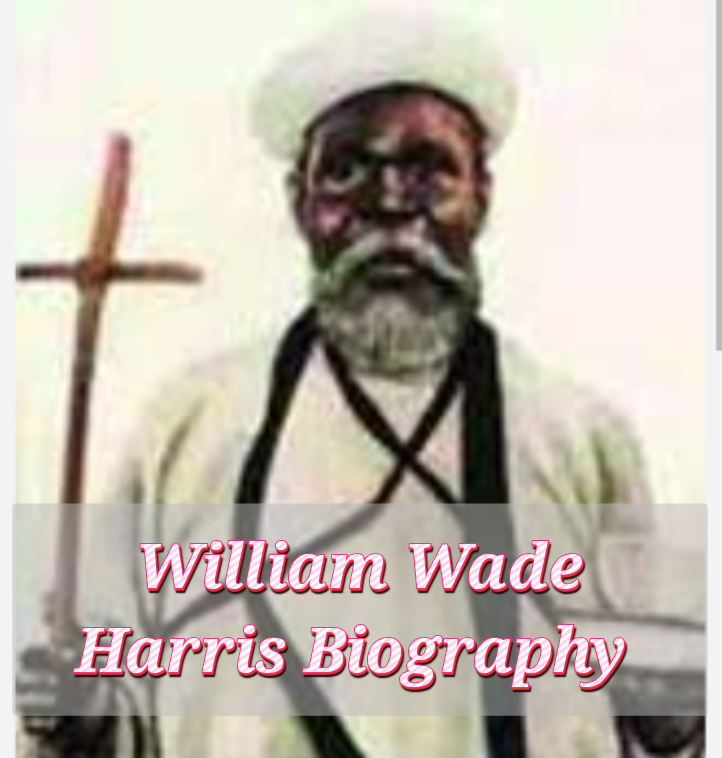
Prison changed everything for Harris. In 1910, while locked up, he had a powerful vision. The angel Gabriel appeared to him, saying he was God’s last prophet, like Elijah or Daniel in the Bible. The angel told him to preach about one true God, destroy idols, and prepare people for Christ’s return. This experience transformed Harris. He called himself the “Black Elijah.” When released in 1913, he began his ministry right away. On July 27, 1913, he set out from Liberia, walking barefoot to Cote d’Ivoire. He wore a white robe and turban, carrying a bamboo cross, a Bible, and a gourd rattle for baptisms. Two women joined him: Helen Valentine, an educated widow, and Mary Pioka, who later had his son. They sang and danced to draw crowds.
Harris’s preaching was simple and direct. He told people to believe in God, get baptized, and reject fetishes—objects used in traditional rituals. He said these things brought harm and that true faith would bring blessings. People burned their fetishes in big fires as a sign of change. Harris performed healings, drove out spirits, and even made rain during dry times. These acts convinced many. He approved of polygamy, saying it fit with some Bible verses like Isaiah 4:1. This made his message more acceptable in cultures where men had multiple wives. From 1913 to 1914, he traveled along the coast to Ghana. In 18 months, he baptized between 100,000 and 120,000 people. His crusade was called the most extraordinary one-man effort in African history.
But success brought trouble. French colonial rulers in Cote d’Ivoire saw Harris as a threat. They feared his crowds could lead to uprisings. In 1915, they arrested him, beat him, and sent him back to Liberia. They banned him from returning. Harris did not stop. He made more trips: one in 1917 to 1918, another in 1919, and one in 1921, going as far as Sierra Leone. During these, he converted more people, including Maame Harris Grace Thannie. She became his third wife and later led the Twelve Apostles Church in Ghana. Harris’s teachings focused on monotheism—the belief in one God. He said the Bible was God’s word and urged people to avoid alcohol, polygamy for some but not all, and prepare for missionaries who would teach more. He blended African elements, like using rhythms in worship, with Christian ideas. This helped faith feel homegrown.
His work sparked independent churches. Followers built simple chapels and waited for teachers. Many joined Catholic or Protestant groups, but others formed Harrist churches. Harris’s style influenced Pentecostalism in West Africa, with its focus on miracles and spirit power. He is also seen as an early voice in the prosperity gospel, teaching that faith leads to good things in life. Through his career, Harris challenged colonial power and traditional ways, pushing for a new kind of African Christianity.
William Wade Harris Personal Life
Harris’s personal life reflected his cultural roots and changing beliefs. He married Rose Badick Farr in 1885 in a Christian ceremony. Rose came from a Christian family; her father was a catechist. They lived in Half-Graway, where Harris built a sturdy home. The couple had six children, though details about the children’s names or lives are scarce. This marriage started as monogamous, fitting church teachings at the time. But around 1910, during Harris’s prison time, Rose heard about his vision and thought he had lost his mind. She became ill from worry and died soon after.
After Rose’s death, Harris’s views on marriage shifted. He began to support polygamy, citing Bible passages. He believed it was okay in African contexts. During his 1913 crusade, he traveled with Helen Valentine and Mary Pioka. Helen was a widow with education, and Mary later gave birth to his son. This arrangement showed his acceptance of multiple partners. Over time, he had more wives. In Axim, Ghana, he admitted to having six wives at one point. One was Maame Harris Grace Thannie, whom he converted. She became his third wife and played a big role in spreading his message after he left. Another was Letitia Williams from Freetown, married around 1921. There were also three unnamed wives in Apollonia.
Harris’s family life intertwined with his ministry. His wives helped by singing and supporting his work. But he lived simply, often in poverty. Despite large crowds, he did not seek wealth. His personal choices, like polygamy, sparked debate in churches. Some saw it as cultural, others as against strict Christian rules. Still, it made his faith more relatable to locals. Harris remained devoted to his calling, putting preaching above personal comfort.
William Wade Harris Later Life and Death
In his later years, Harris continued preaching but faced limits. After expulsion from Cote d’Ivoire in 1915, he returned to Liberia. He made shorter trips, like in 1917 to 1918 and 1921. By the 1920s, his health declined, and he stayed mostly in Liberia. In 1926, he visited followers in Cote d’Ivoire one last time to bless the growing church. He lived modestly, often in need. Harris died in 1929 at age 68 or 69. It was from natural causes, in his daughter’s house in extreme poverty. Despite his humble end, thousands mourned him as a saint-like figure.
Conclusion
William Wade Harris’s life was a journey of faith and change. From a village boy to a prophet who touched over 100,000 lives, he showed how belief can spark big shifts. His work broke down old barriers and built new paths for African Christianity. Today, his legacy endures in churches and stories across West Africa. By standing firm in his vision, Harris reminds us that one voice can echo far. His story encourages us to think about faith, culture, and courage in our own lives.
FAQs
Who was William Wade Harris?
He was a Liberian preacher born around 1860 who led a massive Christian movement in West Africa, baptizing over 100,000 people.
What was William Wade Harris known for?
He was famous for his 1913 to 1914 crusade, where he preached against idols and performed miracles, starting independent churches.
Where did William Wade Harris preach?
He preached in Liberia, Cote d’Ivoire, Ghana, and Sierra Leone, focusing on coastal areas.
What is the Harrist Church?
It is an African-led church founded by Harris’s followers in 1928, with millions of members in West Africa today.
How did William Wade Harris receive his calling?
In 1910, while in prison, he had a vision from the angel Gabriel telling him to preach as God’s prophet.
What was the impact of his ministry?
His work led to mass conversions, the decline of some traditional practices, and the rise of Pentecostal-like movements in Africa.
When and how did William Wade Harris die?
He died in 1929 from natural causes, in poverty at his daughter’s home in Liberia.
Are there books or resources on Harris?
Yes, biographies like those by David Shank and Gabriel Leonard Allen detail his life.
What miracles are associated with him?
He was said to heal the sick, cast out spirits, and bring rain, convincing many to convert.
How did his ministry influence West Africa?
It shifted people from traditional religions to Christianity, promoted local leadership, and challenged colonial rules.